How Much Do Commercial Solar Panels Cost
Businesses researching commercial solar panels are usually looking for a clear price. The practical answer is that commercial solar cost depends on the building, the energy profile, the installation type, and the work required to connect the system safely.
A warehouse with a large, open roof will have different requirements than an office building, manufacturing facility, solar carport, or ground-mounted project. That is why a commercial solar estimate should be based on site conditions and electricity use rather than a standard price assigned to every property.
This blog explains the main factors that affect commercial solar panel cost, how businesses can evaluate overall project value, and what information a contractor needs to prepare a useful proposal.
What Determines Commercial Solar Panel Cost
The cost of a commercial solar system includes more than solar panels. Engineering, mounting equipment, inverters, electrical components, permitting, utility coordination, construction, and commissioning all contribute to the completed project.
The following factors usually have the greatest effect on the scope and cost of a commercial solar installation.
Building Energy Use and System Size
System sizing begins with the property’s electricity use. Aurora Energy reviews recent utility bills to understand annual consumption, seasonal patterns, rate structure, and demand charges. The goal is to design a system that supports the facility’s energy and financial objectives without treating available roof space as the only consideration.
Larger systems require more equipment and construction work, but project size alone does not determine value. Production, utility rates, financing, and long-term performance all influence the financial result.
Roof and Site Conditions
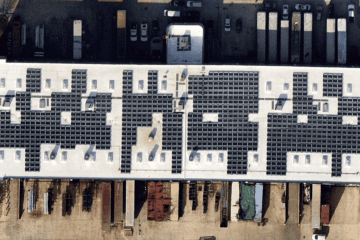
A commercial roof must be evaluated for structural capacity, age, condition, drainage, shading, and access. Rooftop equipment such as HVAC units, vents, and skylights can also affect the array layout.
If a roof needs reinforcement or replacement, that work should be coordinated before solar installation. Ground-mounted systems may involve grading, trenching, fencing, stormwater planning, or other site preparation. Solar carports require their own structural design and construction approach.
Equipment and Design Requirements
Panels, inverters, racking, monitoring equipment, switchgear, transformers, wiring, and safety components all affect project cost. Equipment selection should reflect the building’s available space, electrical infrastructure, operating conditions, and performance goals.
Higher-efficiency equipment may be useful where space is limited. Other properties may benefit from a different balance of equipment cost, system size, maintainability, and long-term production.
Permitting and Utility Interconnection
Commercial solar projects require engineering documents, permits, inspections, and utility approval. Utility interconnection is the process of receiving approval to connect the system to the local electrical grid.
Requirements vary between Maryland, Washington DC, Northern Virginia, and the individual counties and utilities within the region. Some projects also require utility studies or electrical upgrades. Regional permitting and interconnection experience can help identify these requirements early in project development.
How Installation Type Affects Project Cost
Commercial solar can be installed on a roof, on open land, or above a parking area. The best option depends on the property and the owner’s priorities.
- Rooftop solar uses existing building space and can be a practical option for warehouses, offices, retail facilities, and manufacturing properties with suitable roofs.
- Ground-mounted solar can support larger or more flexible layouts when land is available, but it may require additional civil work and permitting.
- Solar carports create covered parking while generating electricity, although the supporting structure and site work make the design different from a standard rooftop system.
A site assessment helps determine which installation type provides the best fit for energy production, property use, construction requirements, and long-term operations.
How Incentives and Financing Affect Net Cost
The installed price is only one part of a commercial solar financial analysis. Eligible projects may benefit from federal tax incentives, depreciation, state or local programs, or solar renewable energy credits. Availability and eligibility can change, and each project should be reviewed with qualified tax and legal advisers.
Project ownership also affects the financial structure. A business may purchase the system directly, use financing, or consider a lease or power purchase agreement. Each option assigns ownership, incentives, maintenance responsibilities, and long-term value differently.
A useful proposal should separate the installed project cost from incentive assumptions and financing terms. This gives the business a clearer view of the project before and after potential financial benefits.
How Long Commercial Solar Installation Takes
Commercial solar schedules vary by system size, permitting requirements, utility review, equipment availability, and the amount of roof, site, or electrical work involved. The physical installation may be shorter than the engineering, approval, and interconnection process that occurs before and after construction.
Aurora Energy can help explain the major project phases and identify which milestones depend on a permitting authority or utility. This helps the property owner distinguish the construction schedule from the full development timeline.
How to Compare Commercial Solar Proposals
Commercial solar is a long-term infrastructure investment. Businesses should compare proposals on engineering quality, scope, projected production, and service responsibilities rather than focusing only on the lowest initial price.
A proposal review should address:
- System size and expected annual electricity production
- The assumptions used in the production and savings model
- Equipment specifications, warranties, and expected replacement items
- Roof, structural, civil, and electrical work included in the scope
- Permitting, utility interconnection, inspections, and commissioning
- Monitoring, maintenance, and long-term service responsibilities
- Incentive assumptions, financing terms, and ownership structure
Clear scope and engineering documentation make it easier to compare contractors on the same basis and reduce the risk of unexpected work later in the project.
What Aurora Energy Needs to Prepare an Estimate
A useful first estimate typically begins with recent electric bills, the property address, information about the roof or available land, and the owner’s project goals. A site assessment and preliminary engineering review can then identify structural, electrical, access, shading, and interconnection considerations.
Aurora Energy installs commercial solar systems across Maryland, Washington DC, and Northern Virginia. The company manages engineering, permitting, procurement, utility coordination, construction, commissioning, and long-term system support under a turnkey EPC model.
Because every commercial property is different, the most reliable way to understand solar cost is to evaluate the facility, its electricity use, and the project objectives together.
Planning commercial solar for your property Request a commercial solar consultation with Aurora Energy.