Commercial Solar Case Study: How Aurora Energy Delivered Measurable ROI for a Mid-Atlantic Business
For commercial property owners considering solar, projected savings are important but so is understanding how a system performs after installation.
A successful commercial solar project requires more than installing panels on a roof. Engineering, system sizing, permitting, utility interconnection, construction, commissioning, and long-term monitoring all contribute to the financial and operational performance of the system.
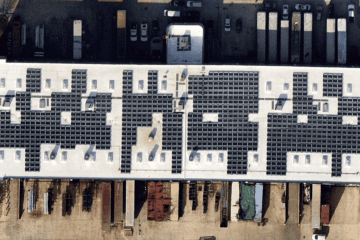
This commercial solar project completed by Aurora Energy demonstrates how an appropriately designed rooftop solar system can turn underutilized commercial roof space into a long-term energy-producing asset.
Aurora Energy provides commercial solar Engineering, Procurement, and Construction (EPC) services throughout Maryland, Washington DC, and Northern Virginia, with projects designed around the specific electrical, structural, utility, and operational requirements of each property.
The Commercial Property & Energy Challenge
Commercial facilities can consume substantial amounts of electricity during normal business operations. That makes energy costs an ongoing operating expense and creates an opportunity for properly sized on-site solar generation.
Before designing a commercial solar system, Aurora Energy evaluates the property’s existing conditions and energy requirements. This includes reviewing historical electricity consumption, available roof or site area, electrical infrastructure, structural conditions, utility requirements, and the property’s long-term energy objectives.
Rather than simply maximizing the number of solar modules that fit on a roof, the objective is to develop a system that makes sense for the building and its energy profile.
This project provided an opportunity to use a large commercial rooftop for on-site renewable energy generation while integrating the solar array with the property’s existing infrastructure.
How Aurora Energy Designed & Installed the System
Every commercial solar installation begins with engineering.
Aurora Energy’s EPC, or Engineering, Procurement, and Construction process coordinates the technical and construction components of a project under a comprehensive project delivery approach.
For a rooftop installation such as this project, that process includes evaluating the existing building and electrical system, determining appropriate system capacity, developing the array layout, selecting equipment, coordinating permits and utility requirements, and managing construction.
System Sizing and Engineering
System capacity refers to the amount of electrical generating capacity installed as part of a solar energy system, typically expressed in kilowatts (kW) or megawatts (MW).
Commercial systems should be sized using more than available square footage. Historical energy consumption, electrical demand, roof conditions, equipment specifications, utility requirements, and the client’s financial objectives can all influence the final design.
Aurora Energy incorporates these considerations during engineering to develop a commercial solar system appropriate for both the facility and its anticipated energy use.
Permitting and Utility Interconnection
Commercial solar projects in the Mid-Atlantic must navigate local permitting and utility requirements before becoming operational.
Utility interconnection is the process of obtaining approval to connect a commercial solar system to the local electrical grid. The process typically requires technical documentation and coordination with the serving utility before a system can receive permission to operate.
Requirements can differ between Maryland, Washington DC, and Northern Virginia and between individual counties and utilities within the region.
Aurora Energy manages engineering, permitting, and utility coordination for commercial properties throughout its Mid-Atlantic service area, helping maintain continuity between system design, construction, inspection, and final operation.
Construction and System Commissioning
Once the necessary approvals are in place, the project moves into construction.
For a commercial rooftop system, installation includes the solar modules and mounting system along with electrical equipment, wiring, safety components, and the infrastructure required to integrate the array with the building’s electrical system.
After construction, the system undergoes commissioning.
System commissioning is the testing and verification process used to confirm that the completed solar installation is operating safely and performing according to its design requirements.
This step establishes an important performance baseline before the system enters long-term operation.
Measurable Commercial Solar Results
Once operational, the value of a commercial solar installation can be evaluated through actual energy production and its effect on the property’s electricity usage.
Kilowatt-hour (kWh) production measures the amount of electrical energy generated by the solar system over time. Monitoring this production allows the system owner to compare actual generation against expected performance.
The financial impact of solar can come from several sources, depending on the property’s energy profile and project structure. These can include reduced utility electricity purchases, applicable solar incentives, and, in some situations, an impact on utility demand charges.
Utility demand charges are portions of some commercial electric bills based on a facility’s highest electrical demand during a billing period rather than simply its total electricity consumption.
Because every facility uses electricity differently, the effect of solar on energy and demand costs should be evaluated using the property’s actual utility data.
Understanding Commercial Solar ROI
Return on investment, or ROI, measures the financial benefit generated by a solar investment relative to its cost.
For a commercial solar project, ROI can be influenced by the installed project cost, annual electricity production, current and future utility rates, available incentives, financing structure, operating expenses, and long-term system performance.
This is why evaluating a commercial solar project solely on the upfront installation price can provide an incomplete picture.
The more useful question is how the system is expected to perform financially over its operating life and whether actual production continues to support those projections after installation.
Long-Term Monitoring & Performance Stability
Completing construction is not the end of a commercial solar project.
Modern commercial systems use monitoring software to track electricity production and system performance after commissioning. Monitoring allows production trends and equipment performance to be reviewed over time and can help identify potential issues requiring attention.
Combined with appropriate inspection and maintenance, long-term monitoring helps protect the owner’s investment and provides visibility into whether the system continues to perform as expected.
For commercial property owners, that visibility is particularly important because the value of solar is generated over years of operation not simply on the day the system is turned on.
Why Regional Commercial Solar Experience Matters
Commercial solar development can vary considerably throughout the Mid-Atlantic.
A project in Baltimore or Prince George’s County may encounter different permitting and utility processes than a project in Montgomery County, Washington DC, Fairfax County, or Arlington.
Regional experience helps anticipate those differences during development rather than discovering them after engineering or construction has begun.
Aurora Energy installs commercial solar systems across Maryland, Washington DC, and Northern Virginia, with experience coordinating engineering, permitting, construction, interconnection, commissioning, and long-term system performance throughout the region.
From Commercial Rooftop to Long-Term Energy Asset
A large commercial roof is more than unused building space. With the right engineering and project strategy, it can become an energy-producing asset that helps offset electricity purchased from the grid for decades.
The success of a commercial solar project ultimately depends on more than its installed capacity. Design quality, energy production, utility integration, construction execution, commissioning, and long-term performance all contribute to the project’s return.
For businesses evaluating solar in Maryland, Washington DC, or Northern Virginia, reviewing both projected economics and real-world system performance can provide a clearer picture of what commercial solar can accomplish.
Request a Commercial Solar Performance Review
Considering solar for a commercial property?
Aurora Energy can evaluate your facility’s electricity usage, available installation area, and project objectives to help determine whether commercial solar makes financial and operational sense for your property.
Request a Commercial Solar Performance Review to begin evaluating your facility.