Commercial Solar vs. Rising Utility Costs in Maryland, DC & Virginia
For businesses in Maryland, Washington DC, and Northern Virginia, electricity is more than a monthly expense it is an operating cost that can be difficult to predict over the long term.
Utility rates, demand charges, and changing energy-market conditions can make future electricity expenses challenging to forecast. For commercial property owners and financial decision-makers, this uncertainty can complicate long-term budgeting.
Commercial solar offers a different approach. By generating electricity at the property, businesses can reduce their dependence on utility-supplied power and create a more predictable source of energy for years to come.
Understanding commercial solar savings requires looking beyond today’s electric bill and comparing the long-term cost of continuing to purchase utility power against investing in on-site energy generation.
How Utility Rate Inflation Impacts Commercial Operating Costs
Commercial electricity expenses can change for several reasons, including energy prices, transmission and distribution costs, regulatory changes, and utility rate adjustments.
For businesses with significant electricity consumption, even relatively small increases can have a meaningful impact when compounded over many years.
Commercial customers may also pay demand charges in addition to charges for the electricity they consume. A demand charge is typically based on a facility’s highest level of electrical demand during a billing period.
This means businesses must consider both total electricity consumption and how electricity is used when evaluating long-term energy costs.
For CFOs and facility managers, the challenge is predictability. A business can estimate future utility expenses, but it generally cannot control future utility rates.
How Commercial Solar Can Stabilize Energy Expenses
Commercial solar changes the equation by allowing a business to produce a portion of its electricity on-site.
Once installed, a solar energy system can generate electricity for decades. Every kilowatt-hour produced by the system represents electricity that may not need to be purchased from the utility, depending on when and how the facility uses energy.
This creates an opportunity for energy cost reduction for businesses while also reducing exposure to future utility-rate increases.
The value becomes particularly important over longer time horizons. Instead of evaluating solar solely against today’s utility rate, businesses can compare the cost of the solar investment against years of anticipated electricity purchases.
For properties with suitable energy consumption and site conditions, that comparison can make commercial solar an important component of long-term energy budgeting.
Is Commercial Solar Cheaper Than Utility Power?
The answer depends on the property, system, utility rate, available incentives, and length of the analysis.
Commercial solar requires an upfront investment or financing commitment, while utility electricity is generally purchased as an ongoing operating expense.
The appropriate comparison is therefore not simply the cost of installing solar versus one year of electricity bills.
Businesses should compare the long-term cost of utility electricity with the net cost and expected production of the solar system over the same period.
A financial analysis can model current utility costs, expected rate escalation, solar production, project costs, incentives, and operating expenses to estimate how the two scenarios compare over 10, 20, or more years.
Comparing 10-Year Utility Costs vs. a Solar Investment
Consider a business evaluating its next decade of energy expenses.
Under a utility-only scenario, the business continues purchasing electricity at the rates established by its utility. If rates increase, operating expenses increase with them.
With commercial solar, a portion of that future electricity requirement can instead be supplied by an asset installed at the property.
A useful commercial solar cost comparison should consider:
- Current annual electricity costs
- Expected utility-rate escalation
- Historical energy consumption
- Proposed solar-system production
- Installed project cost
- Available tax incentives
- State or local renewable-energy programs
- Financing structure
- Operations and maintenance
- Expected system life
Comparing these factors provides a more complete picture than evaluating solar based only on its initial installation cost.
Understanding Commercial Solar Payback
The commercial solar payback period is the estimated amount of time required for the financial benefits generated by the solar project to recover the net project investment.
A shorter payback is generally attractive, but it is not the only measurement businesses should consider.
A solar system can continue producing electricity well beyond its projected payback period. As a result, evaluating total long-term savings and return on investment can provide a more complete financial picture.
Actual payback varies considerably by property. Electricity consumption, utility rates, system size, installed cost, solar production, incentives, and financing can all affect the calculation.
How Incentives Can Affect Commercial Solar ROI
Commercial renewable-energy incentives can significantly influence project economics.
The Investment Tax Credit (ITC) is a federal tax incentive that may allow eligible solar-project owners to claim a percentage of qualified project costs as a tax credit, subject to applicable requirements.
Other federal tax provisions and depreciation benefits may also affect project economics depending on the business and project structure.
Regional programs can further change the financial analysis.
For example, Maryland businesses may have opportunities associated with the state’s solar renewable energy market, while Washington DC maintains its own solar incentive structure. Virginia operates under a different regulatory and utility environment.
Because these programs and requirements can change, businesses should evaluate current incentives when analyzing a project and consult qualified tax and financial professionals regarding eligibility.
How Much Can a Business Save With Commercial Solar?
There is no universal percentage that accurately represents commercial solar savings for every business.
Savings depend on factors including:
- Electricity consumption
- Current utility rates
- Future utility-rate changes
- Available installation area
- Solar-system size and production
- Demand profile
- Incentives
- Financing
- System ownership structure
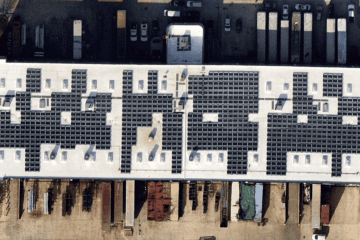
A warehouse with a large roof and substantial daytime electricity consumption, for example, may have a very different solar opportunity than an office building with lower or less consistent energy usage.
The most accurate way to estimate savings is to analyze the property’s actual utility bills and energy consumption alongside a site-specific solar design.
Why Timing Matters in Incentive-Based Markets
The economics of a commercial solar project are influenced by more than equipment and electricity costs.
Federal tax policies, state renewable-energy programs, utility rules, equipment markets, and regulatory requirements can change over time.
Waiting may provide access to different technology or market conditions, but it can also mean continuing to purchase electricity at changing utility rates or encountering different incentive structures.
Businesses considering solar should therefore evaluate projects based on current economics and current program requirements rather than assuming today’s incentives or utility conditions will remain unchanged indefinitely.
Regional Energy Strategy Matters
Commercial solar economics vary throughout the Mid-Atlantic because Maryland, Washington DC, and Northern Virginia operate under different utility, regulatory, and incentive environments.
Aurora Energy focuses on commercial solar projects throughout this region, providing Engineering, Procurement, and Construction (EPC) services while coordinating permitting and utility requirements for commercial properties.
That regional experience is important when evaluating not only what a system costs to install, but how local electricity rates, utility requirements, incentives, and project conditions affect its long-term financial performance.
Take Control of Long-Term Energy Costs
Businesses cannot control future utility rates, but they can evaluate alternatives to purchasing all of their electricity from the grid.
Commercial solar can provide a way to convert a portion of an unpredictable operating expense into a long-term energy-producing asset.
The question is not simply, “How much does commercial solar cost?”
A more useful question is: “How does the cost of solar compare with what our business is likely to spend on utility electricity over the next 10, 20, or more years?”
For businesses in Maryland, Washington DC, and Northern Virginia, answering that question starts with the property’s actual energy data.
Get a Commercial Solar Cost Comparison Analysis
Aurora Energy can evaluate your facility’s electricity usage, utility costs, available installation area, and project objectives to compare the potential cost of commercial solar with continued utility electricity purchases.
Get a Commercial Solar Cost Comparison Analysis from Aurora Energy to better understand the long-term energy options for your property.