FY27 MEA Grant Deadline: What Maryland Commercial and Community Buildings Should Do Now
Application deadline: 3:00 p.m. Eastern Time on Wednesday, December 9, 2026
Maryland organizations planning energy upgrades have a time-sensitive funding opportunity through the Maryland Energy Administration’s Fiscal Year 2027 Commercial & Community Buildings Grant Program. The statewide competitive program can support eligible projects that improve building energy performance and reduce onsite greenhouse gas emissions, including energy efficiency, electrification, renewable energy, and energy storage measures.
The deadline is close, and this is not a simple form that should be left until the final day. A complete application may require a defined scope of work, building and energy information, cost documentation, project-impact calculations, ownership or site-control records, and other supporting materials. Organizations interested in applying should begin eligibility and project-readiness review immediately.
For commercial solar prospects, one point is especially important: the program’s general commercial-building audience is broader than its solar eligibility. Under the current FY27 Funding Opportunity Announcement, standalone solar measures are limited to eligible nonprofit organizations, local governments, and Local Education Agencies. For-profit commercial buildings may be eligible for other program measures, such as qualifying efficiency or electrification upgrades, but should not assume that a solar project qualifies for this grant.
What Is the FY27 Commercial & Community Buildings Grant Program
The Maryland Energy Administration, or MEA, created the program to advance building decarbonization across eligible Maryland properties. It combines several types of building improvements within one competitive funding opportunity and evaluates proposed projects based on their expected impact and alignment with program goals.
The program includes tracks for commercial buildings, local government buildings, Local Education Agencies, mechanical insulation, and community resilience. Eligible project categories vary by track. Because the rules are detailed, the first step is not choosing equipment—it is identifying the correct applicant, building, project type, and program track.
Awards are competitive rather than first-come, first-served. Submitting before the deadline does not guarantee funding. MEA evaluates complete applications against published criteria, including greenhouse gas reduction, cost effectiveness, projected building-energy improvement, the need for grant support, and community impact.
Who Should Pay Attention to This Deadline
The FY27 program identifies several potential audiences, including large and small commercial buildings with for-profit or nonprofit owners, multifamily buildings, community-serving organizations, county and municipal governments, and eligible public educational facilities. However, eligibility depends on the applicant, the building, the proposed measures, and the selected track.
Organizations that may have a relevant opportunity include:
- Nonprofits considering rooftop solar, ground-mounted solar, or a solar canopy
- Local governments evaluating solar or broader building-energy improvements
- Local Education Agencies planning eligible energy or solar projects
- Commercial and multifamily building owners pursuing qualifying efficiency or electrification improvements
- Organizations considering a coordinated project with energy storage, resilience, or other eligible building measures
The program is not a blanket rebate for every commercial property or every solar installation. Applicants should review the current Funding Opportunity Announcement and confirm eligibility before investing significant time in an application.
How Solar Fits Into the MEA Program
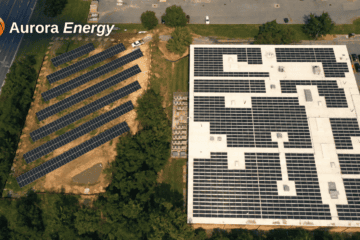
For eligible nonprofit, local-government, and Local Education Agency applicants, the program recognizes several commercial-scale solar configurations. These include rooftop systems, ground-mounted systems, and solar canopies over existing parking lots, parking garages, or other qualifying permanent impervious areas owned by the applicant.
A directly owned system and a third-party-owned system may both be considered, subject to the program’s requirements. A third-party-owned system must be net metered. The Funding Opportunity Announcement also permits certain related improvements to be included with an eligible solar measure, such as roof work associated with rooftop solar and specific electrical or building upgrades performed in tandem with the project.
Community-solar arrays registered through the Maryland Public Service Commission’s Community Solar Program are listed as ineligible under this funding opportunity. That distinction matters: an onsite system serving an eligible building is not automatically treated the same as a separately registered community-solar project.
Why Waiting Creates Risk
The December 9 deadline is more than a date on the calendar. The application calls for enough project information to support a competitive evaluation. If the proposed system, building data, costs, ownership structure, or energy impacts are still unclear, the organization may not have enough time to resolve gaps before the portal closes.
MEA states that incomplete applications may not be considered. That makes early coordination important even when the equipment is not yet under construction. A practical application process may involve leadership, facilities, finance, procurement, engineering, and the proposed project team—not just the person completing the online form.
Applicants also should understand that grant payments are structured as reimbursements after documented milestones. A strong project plan must address the organization’s ability to carry project costs, satisfy grant-agreement requirements, and provide the records required for reimbursement and reporting.
A Practical Readiness Checklist
Organizations interested in the grant should use the remaining time to answer the following questions:
- Is the applicant eligible for the proposed measure and the selected program track?
- Is the project site located in Maryland, and does the applicant own, lease, or otherwise legally control it?
- If the applicant does not own the property, can the required owner authorization be documented?
- Is there a clearly defined scope of work supported by current building and energy information?
- For solar, has the roof, parking area, ground area, electrical service, and expected energy use been reviewed?
- Are preliminary project costs, equipment assumptions, schedule, and energy-impact calculations available?
- Who has authority to sign the application and oversee the project if selected?
- Can the organization meet the grant agreement, reimbursement, reporting, and implementation requirements?
This checklist is a starting point, not a substitute for the full MEA requirements. The official program materials control if there is any difference between a general summary and the Funding Opportunity Announcement.
How Aurora Energy Can Help
Aurora Energy can help an organization turn an initial interest in commercial solar into a more defined, decision-ready project. That work can include reviewing the property and energy goals, evaluating potential rooftop, ground-mount, or canopy configurations, developing a preliminary system concept, identifying major site constraints, and coordinating technical information needed for project planning.
For organizations pursuing the FY27 MEA grant, Aurora Energy can support the solar-project side of the process and help clarify what information may be needed from the project team. The applicant remains responsible for confirming eligibility, preparing a complete application, meeting MEA requirements, and submitting through the My MEA Portal.
If the current grant is not a fit—particularly for a for-profit business seeking a solar-only project—Aurora Energy can still help evaluate the site’s commercial solar potential and discuss other available financial and project-development pathways. A grant decision should be part of the planning conversation, not the only reason to determine whether solar makes sense for a property.
The Next Step: Start Before the Deadline Becomes the Barrier
The FY27 Commercial & Community Buildings Grant Program presents a meaningful opportunity, but only for projects and applicants that match the published rules. With the application due at 3:00 p.m. Eastern Time on December 9, 2026, the most useful next step is an immediate eligibility and project-readiness review.
Considering an eligible commercial-scale solar project in Maryland? Contact Aurora Energy to discuss your site, project goals, and the technical information needed to move forward.
Frequently Asked Questions
When is the FY27 MEA Commercial & Community Buildings Grant application due
The current application deadline is 3:00 p.m. Eastern Time on Wednesday, December 9, 2026. Applications are submitted through the My MEA Portal. Applicants should verify the portal status and current requirements directly with MEA before submission.
Is the program first-come, first-served
No. The FY27 program is statewide and competitive. MEA evaluates eligible, complete applications using the criteria published in the Funding Opportunity Announcement, subject to available funding.
Can any Maryland business receive this grant for solar panels
No. Although the program serves a broad commercial-building audience, the FY27 Funding Opportunity Announcement limits eligible standalone solar measures to nonprofits, local governments, and Local Education Agencies. A for-profit commercial building may be eligible for other qualifying measures, but should not assume its solar project is eligible.
Does Aurora Energy guarantee that an applicant will receive an award
No. Aurora Energy can support solar evaluation, design, technical planning, and project development, but MEA determines eligibility and awards. Funding is competitive, and a complete application does not guarantee selection.
Can work begin before an MEA award
Applicants should follow MEA’s current rules and grant-agreement requirements before authorizing work or incurring costs they expect the grant to cover. Confirm timing and cost eligibility directly with MEA and qualified advisors.