Commercial Rooftop Solar vs. Ground-Mount: Which Is Right for Your Business?
When considering commercial solar systems, one of the first questions businesses face is whether to install rooftop solar panels or a ground-mounted solar system. Both options can deliver significant energy savings and sustainability benefits—but the right choice depends on your property, budget, and long-term goals.
In this guide, we’ll compare commercial rooftop solar and ground-mount systems to help you decide which setup makes the most sense for your business.
Rooftop Solar for Businesses
Best Building Types for Rooftop Solar
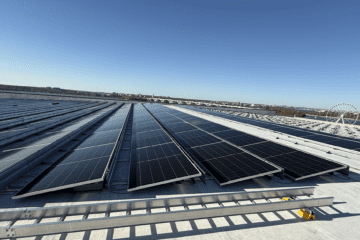
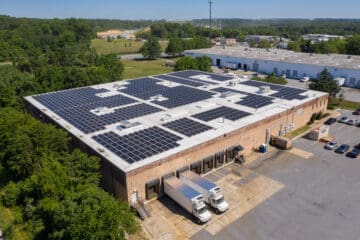
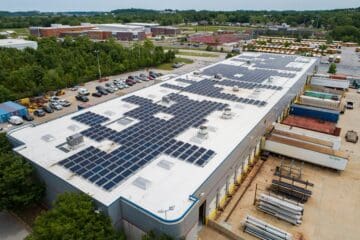
Rooftop solar panels are ideal for buildings with large, unobstructed, and structurally sound roofs. This typically includes warehouses, distribution centers, retail facilities, and manufacturing plants.
Flat or low-slope roofs are the most common candidates because they allow flexible panel placement for optimal sunlight exposure. Multi-story office buildings can also benefit from rooftop systems, though available space may limit the total system size.
Businesses with strong roof integrity and limited ground space often find rooftop solar to be the simplest, most cost-effective way to produce clean energy on-site.
Cost and Installation Considerations
Rooftop installations generally have lower upfront costs than ground-mount systems because they don’t require foundations, fencing, or additional land preparation.
However, the roof must meet certain structural and electrical requirements. Older buildings may need roof reinforcement or electrical upgrades before installation. It’s also important to coordinate panel placement with HVAC units, skylights, or vents that may affect layout and energy yield.
Maintenance is minimal, but businesses should ensure their roofing material has enough remaining life to match the solar system’s 25-year lifespan.
Ground-Mount Solar Systems for Businesses
When Ground-Mount Makes More Sense
If your business has ample unused land or if your roof can’t support solar panels, a ground-mounted solar system may be the better option.
Ground-mount arrays are common for industrial facilities, agricultural operations, and rural commercial properties where open land is available. They can also be installed near parking lots or along property edges without interfering with operations.
This setup allows for precise orientation and tilt angles, which can increase energy production compared to rooftop arrays limited by roof design.
Land Requirements and Scalability
A general rule of thumb is that 1 megawatt (MW) of solar requires 4–6 acres of open land, depending on panel efficiency and spacing.
Ground-mount systems offer greater scalability and you can easily expand as your energy needs grow. Additionally, they simplify maintenance since panels are easily accessible at ground level.
That said, ground-mount systems may require grading, trenching, fencing, and stormwater management, which can add to upfront costs and permitting time.
Comparing Costs and ROI
Installation Cost Differences
While rooftop solar panels are often more affordable to install per watt, ground-mounted solar systems can provide higher output and flexibility, sometimes improving long-term ROI
Businesses should weigh the upfront cost against long-term performance and the ability to scale.
Energy Production and Efficiency Factors
Ground-mounted arrays often outperform rooftop systems in total energy generation because they can be positioned for maximum sun exposure and avoid shading issues.
However, rooftop solar still provides excellent efficiency for businesses located in urban or space-constrained areas, reducing grid dependence without consuming valuable land.
Both systems benefit from federal tax credits, depreciation (MACRS), and state-level incentives, improving overall return on investment.
Which Option Is Right for Your Business?
Small Office Buildings vs. Large Warehouses
For small office buildings with limited energy usage or roof space, rooftop solar is usually the most practical and affordable solution.
In contrast, large warehouses, factories, and logistics centers often benefit from a hybrid approach of rooftop panels combined with additional ground-mounted arrays to cover higher energy demands.
Urban vs. Suburban vs. Rural Properties
Location plays a key role.
- Urban businesses with limited real estate should focus on rooftop installations or even solar carports.
- Suburban properties may have the flexibility for either option, depending on zoning and available space.
- Rural businesses or agricultural operations typically gain the most from ground-mount systems thanks to lower land costs and abundant open areas.
Aurora Energy’s Approach to Helping Businesses Decide
Site Evaluations and Solar Assessments
At Aurora Energy, we start with a comprehensive solar assessment to determine which option rooftop solar or ground-mounted solar system best suits your property. Our engineers analyze roof condition, land availability, shading, and energy consumption to design a system that aligns with your business goals.
Custom Solutions Tailored to Long-Term Growth
Every business has unique energy needs and facility constraints. Aurora Energy delivers custom-designed commercial solar systems that maximize ROI, minimize downtime, and align with your sustainability objectives.
Whether your project involves a high-efficiency rooftop system or a scalable ground-mounted array, we guide you from concept to commissioning with transparency and expertise.
Final Thoughts
Both commercial rooftop solar and ground-mounted solar systems offer powerful paths toward cleaner energy and reduced operating costs. The best choice depends on your property characteristics, available space, and energy goals.
With expert guidance from a trusted solar partner like Aurora Energy, your business can confidently invest in the right solar solution, one that powers growth, saves money, and supports a sustainable future.